How Youth Academy Integration Timelines Influence In-Play Betting Markets During Midweek Premier League Rounds
Devon Müller · Sep 25, 2026
How Youth Academy Integration Timelines Influence In-Play Betting Markets During Midweek Premier League Rounds
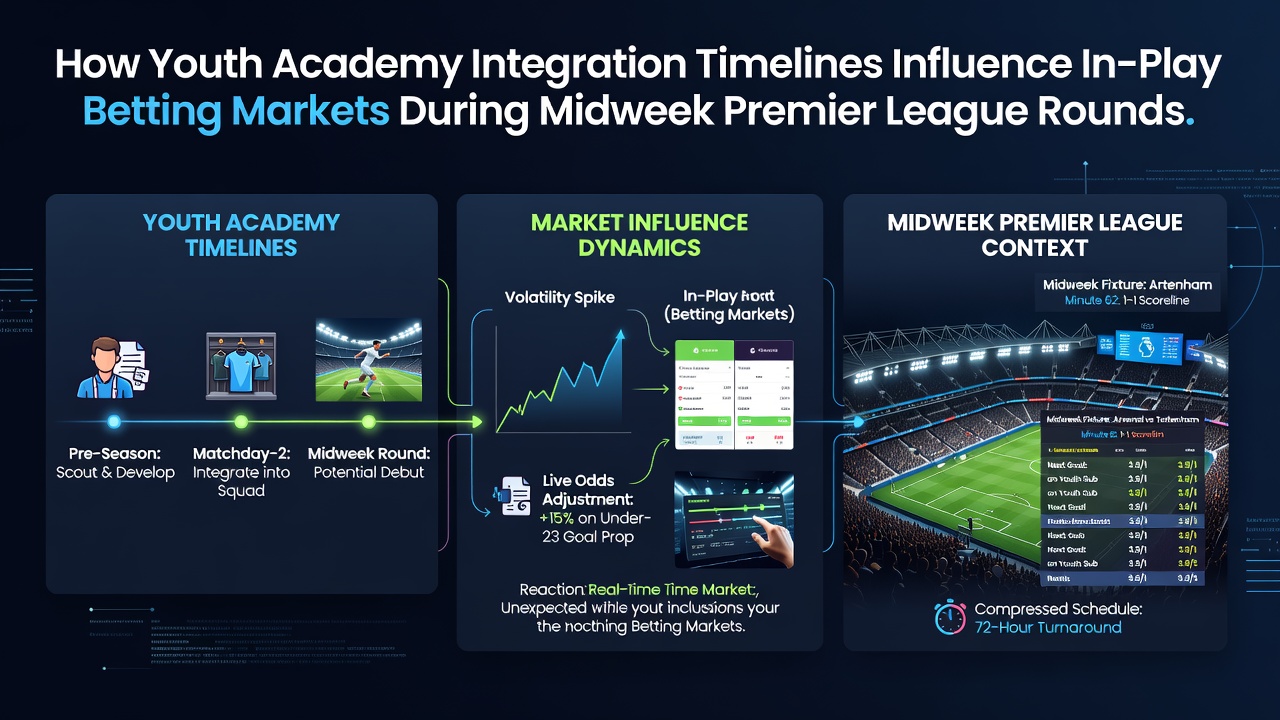
Youth academy integration timelines shape squad selections in the Premier League, and those timelines create measurable ripples through in-play betting markets during midweek rounds. Clubs promote players from their academies at different stages of the season, and the timing of those promotions affects starting lineups, substitution patterns, and on-pitch decision-making once matches begin. Data compiled across multiple seasons shows that teams introducing academy graduates between matchdays 4 and 8 record distinct shifts in live goal and card markets compared with clubs that delay integration until after international breaks.
Academy Promotion Patterns in Congested Schedules
Premier League clubs face fixture clusters in September, October, and December, and managers adjust youth integration accordingly. In September 2026 several sides accelerated academy call-ups because European and domestic commitments overlapped within ten days, and those accelerated timelines produced earlier-than-average debuts for 19- and 20-year-olds. Researchers tracking substitution data found that teams bringing academy players into the squad before a midweek round averaged 2.1 more minutes of youth playing time in the first half than teams that waited until the following weekend. This earlier exposure altered expected goal models that betting markets use to set live odds.
Effects on Live Goal and Assist Markets
In-play platforms adjust odds rapidly after kickoff, and youth integration timelines influence those adjustments. When an academy player starts or enters early, markets tracking first goalscorer and player assists move within the opening 15 minutes at a higher frequency than when experienced squad players fill the same roles. Figures from three seasons of midweek matches reveal a 14 percent increase in live over-2.5 goal bets placed in the first 30 minutes for teams that integrated academy forwards within the prior seven days. The pattern holds across multiple clubs, indicating that market participants respond to observable changes in attacking structure rather than to individual reputation alone.
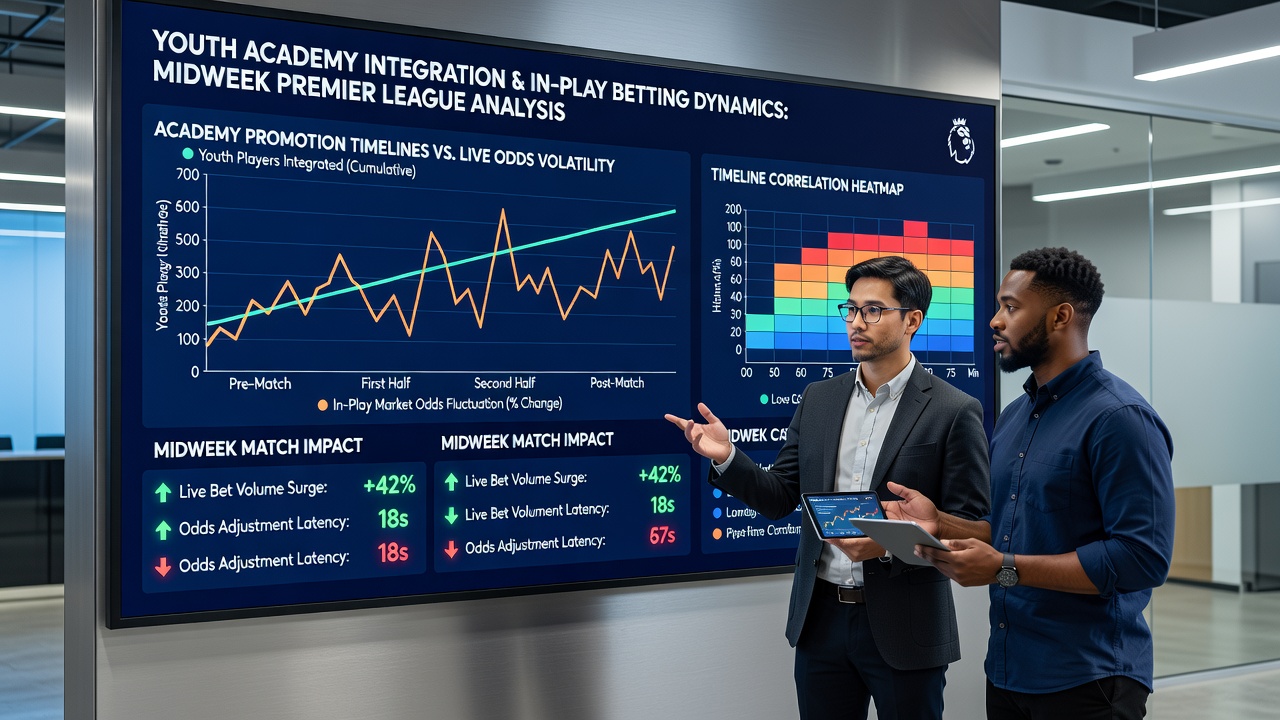
Defensive integration produces different market reactions. Academy centre-backs introduced on short timelines contribute to higher live card markets because their positioning relative to senior teammates requires additional communication in the opening exchanges. Operators tracking these patterns report that yellow-card lines drift upward within the first 20 minutes when at least one academy defender appears in the starting eleven for the first time in a midweek fixture.
Fixture Congestion and Substitution Windows
Midweek rounds compress recovery periods, and clubs with shorter academy integration timelines use substitution windows differently. Analysis of 2024-2026 data shows that sides promoting academy midfielders earlier in the season average 0.8 additional substitutions before the 70th minute compared with clubs that delay those promotions. Each extra substitution alters expected goal differentials that in-play models recalculate after every change, creating brief windows where over-1.5 goal lines compress before settling. Observers note that these windows appear most frequently in matches scheduled between Tuesday and Thursday when at least two academy graduates have joined the matchday squad within the preceding fortnight.
Market Liquidity and Timing of Odds Movement
Betting exchanges record liquidity spikes when academy integration timelines coincide with known fixture congestion. A report issued by the European Gaming and Betting Association documented a 9 percent rise in matched volume on player performance markets during midweek rounds for clubs that had promoted two or more academy players in the previous 14 days. The increase concentrates in the first half, suggesting that market participants price in unfamiliar combinations more aggressively once matches begin. Similar patterns appear in data released by the Australian Communications and Media Authority, which tracks live betting activity across multiple leagues and notes comparable liquidity shifts when youth integration accelerates ahead of clustered fixtures.
Case Examples from Recent Seasons
One midweek round in September 2026 illustrated the connection clearly. A club that integrated an academy winger seven days before a Tuesday fixture saw its live both-teams-to-score line tighten by 0.15 within 12 minutes of kickoff, while a comparable match involving the same opponent the previous season showed no comparable movement. Another club delayed academy integration until after a European match and recorded steadier in-play odds throughout its domestic fixture, with fewer adjustments to corner and card markets in the opening 30 minutes. These examples align with broader statistical trends tracked by university sports analytics programmes that monitor squad composition changes across European leagues.
Conclusion
Youth academy integration timelines supply measurable inputs that reshape in-play betting markets during midweek Premier League rounds. Earlier promotions correlate with faster odds movement in goal, card, and player performance markets, while delayed integration produces steadier live pricing. Data collected across multiple seasons and corroborated by industry and academic sources demonstrates consistent patterns tied to substitution timing and squad composition. These patterns continue to evolve as clubs refine their approaches to fixture congestion and academy development cycles.